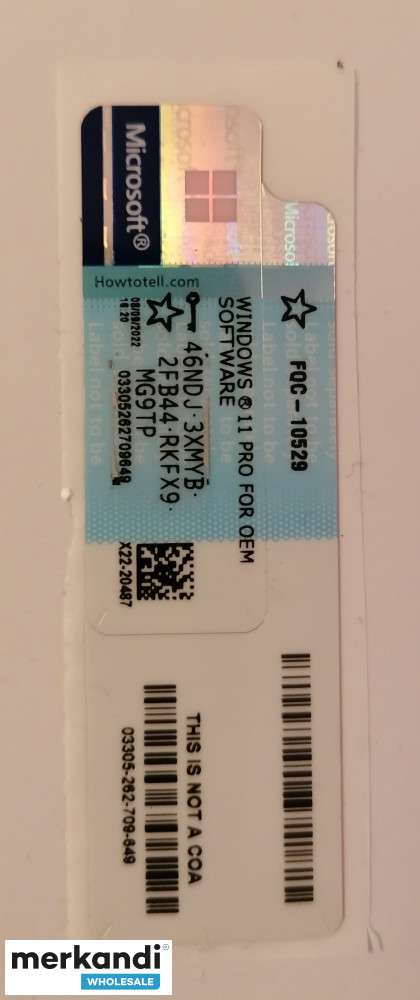
It's not about buying the cheapest license for a small-sized business. It's about taking a strategic strategy that lowers risk over the long haul and assures conformity. A haphazard mix of grey-market windows 11 OEM keys and standalone Office purchase results in a shaky, insecure IT infrastructure that is insecure and unstable. The most important factor to achieve cost-effectiveness is understanding the way Windows licensing and Office subscriptions interact with security software. This guide goes beyond price tags and outlines the top 10 factors to create an efficient and long-lasting software environment that's cost-effective for expanding businesses. It brings everything together from the operating system for desktops to access to servers, security and many more.
1. Windows 11 Home has no place in the business.
The most common and costly error is buying a low-cost Windows 11 Home key for a business workstation. Windows 11 Home does not allow joining to an Active Directory or Azure Active Directory domain. Additionally, it does not support BitLocker for encryption of sensitive information. Additionally, it requires users to install disruptive updates. Windows 11 Pro will be required on any device that manages business data. The modest upfront cost over Home is not negotiable in terms of security, efficiency, and professional credibility. The business that operates on Home licences has a high-end consumer infrastructure, which is a significant risk.
2. OEM Vs. Retail: The "Hardware Refresh" Cost Calculator.
If you're purchasing Windows 11 for business use, your decision between OEM and Retail will have implications for the long run. The OEM license might be less expensive initially, but will end when the first PC the license is installed on. A retail license can be transferred. OEM is a good option for computers that are disposable and will be replaced every 3 to 4 years. Retail licenses will save you money if the workstation you're using is higher end or if the components are upgraded separately. Determine the Total Cost of Ownership (TCO) If the lifecycle cost of a PC is $800, and the cost of an OEM Pro license is $140 versus. Retail price of $200, the $60 premium for Retail is cheap insurance for future flexibility, particularly when you are decommissioning old hardware.
3. Microsoft 365: The Ecosystem Where Cost-Effectiveness Really Lives.
Office 2021 as well as other one-time office lizenz purchases are no longer an option for dynamic firms. Microsoft 365 Business Premium is about $22. The most cost-effective option is usually Microsoft Business Premium 365 ($22/user/month). It includes: Windows 11 Pro upgrade rights (solving your `windows 11 lizenz kaufen` need), the full Office suite, 1TB OneDrive cloud storage, business-class email, and–crucially–Intune for device management and Azure AD for identity. The single subscription is legal, modern and offers management tools for your entire desktop. It transforms capital expenses into predictable operating costs.
4. The Windows 7 Upgrade Path: A Security and Compliance Mandate.
Businesses clinging to `windows 7are sat on a ticking time bomb of software that isn't supported. It's not just about the latest features. It is also a requirement to ensure compliance and security. It's more than just buying a new "Windows 11 lizenz". It's a chance to review the whole software solution. Migrating from Windows 7 + perpetual Office to a device powered by the Microsoft 365 Business subscription modernizes security, enables cloud backup and enables remote work. It is not the OS crucial element that will cost you money however, it is the subscription.
5. Understanding the "CAL Shadow Cost" for Future Growth.
If you are planning to use an on-premise server such as windows server 2025" for databases, file sharing or line of business applications, you must budget for Client Access Licenses (CALs). Every single device or individual user who connects to the server needs the CAL. It is not included in the Windows Pro desktop licence. A small-scale business that is planning to plan for this expansion should include CALs into long-term budgets. Windows 11 Home, which can't legally access Windows Servers in a business context, or access that is not licensed could pose a serious possibility of non-compliance in a software auditor.
6. Bundling in contrast to. best-of-breed: Integration of Security.
The complexity of licensing is influenced by your choice between Windows Defender, which comes included in the package, and third-party software like "kaspersky premium" or "norton 360". Microsoft 365 Premium features enhanced Defender and centralized management of threats. The addition of a third-party software suite may be redundant. This could result in additional costs and administrative burdens. If you're searching for a solution that can meet the specific requirements of your regulatory system, or if you want to work with a third party platform, then a consistent system is crucial. A single solution that is licensed across all workstations is efficient and less expensive than patchwork. It's the effort to manage the disparate systems that is often the "cost" of security.
7. Grey Market Trap. False pricing in the licensing process.
On markets that are not official there are prices that appear too good to aren't they. These are typically volumes license keys, OEM keys violating terms or keys from other regions. Microsoft may deactivate the keys leaving you with insecure license-free software. It is also possible to be punished through an audit. A business is exposed to an enormous, unfunded risk. The purchase of Microsoft Cloud Solution Providers is the best way to ensure full legitimacy and support.
8. Perpetual Office 2021: The Niche for Static, Air-Gapped Scenarios.
Office Professional, e.g. 2021) is a permanent standalone license, which is only available for a small-business case. This license is for workstations that never require cloud services, will never connect to the latest management systems, and will have the same features that are set for five years or more (until maintenance ends). This is a rare thing. Small businesses can benefit from subscription models offer more functionality in particular in the area of tools for collaboration (Teams/SharePoint) as well as cloud-based storage of files, and mobile accessibility. The "costs" of perpetual licensing include stuck in software stagnation and the loss of productivity gains.
9. Modelling your mobility using devices: Vs. User Licensing.
The licensing system is traditional (one Windows 11 OEM per PC). Microsoft 365 uses a user-based licensing model. A single license is able to cover as many as five devices (PCs, tablets, Macs, and phones). It is a cost-effective option for companies with mobile workers, hybrid workers or those who offer laptops as well as a desktop. You are able to license the individual, not the machine. Consider the actual mobility of your workforce when planning your license strategy. A subscription that is dependent on the user's location decreases the number of licenses when compared with ones dependent on devices.
10. Designing an Coherent stack for Audit-Ready.
It is essential to have a stack of software that is easy to use and well-documented. Also, it must be in compliance with the law. Microsoft 365 Premium for Windows 11 Pro (per user), Office, Management, Security + Retail or OEM Windows 11 Pro Licenses for any devices (e.g. kiosks) not covered under the subscription + Secure, consistent security practices (either by using Defender in M365 or through a central, third-party tool). This system provides audit-ready features, is scalable and predictable. Its "cost" is the cost of chaos: incompatibility, loss of data, weak security and non-compliance. Have a look at the top windows 11 lizenz kaufen for more advice including microsoft visio, microsoft office 2019, ms office 2019, windows server 2019, windows and office, microsoft office key, ms office 2019, product keys, microsoft office 2016, office 2016 software and more.
The True Cost Of Software: Why A Legit Windows License & Antivirus Save Money.
In today's digital age, saving money on software in the short-term could have devastating consequences in the long-term. The logic behind buying a cheap `windows 11 oemkey' from a grey market website or avoiding a reliable antivirus like `kaspersky premium` in favor of nothing is a fundamental misinterpretation of the risks and benefits. The true cost of software does not come from its purchase price. It comes from the Total Cost of Owning (TCO), which is the total of security-related breaches and data loss, downtimes, compliance fines and productivity losses over the duration of the software. For serious users and businesses, a genuine windows 11 lizenzas well as a security suite that is professional grade aren't just expenses, they are essential infrastructure investments that yield a tangible return on investment in risk reduction. This analysis deconstructs the ten hidden cost centers that create the "cheap" option extremely costly, connecting the dots from OS licensing to the server infrastructure and productivity software.
1. The Grey Market License Is a Liability and Not An Asset
The buyer of a windows11 license from a seller who is not registered is accountable. These keys, typically large-scale licenses or MSDN keys that violate terms, are subject to bulk deactivation by Microsoft. Microsoft will remove all the keys that are usually volume licenses and MSDN keys that are in violation of the terms. This cost dwarfs the savings of $30 from the first key. A valid license, whether it's from a Retailer or an OEM authorized by the manufacturer, is a reliable asset that will function predictably throughout the lifetime of the hardware.
2. OS Integrity determines the effectiveness of Security Software.
Antivirus suites such as kaspersky or norton360 work at the kernel level and require a fundamental operating system that is secure safe, reliable, and secure. Grey-market Windows installations typically use modified software or files to enable activation to bypass the validation process. The modifications are typically identified as malicious. They can destabilize your security suite or create backdoors. You are paying for a premium security guard (`kaspersky premium`) however, they are stationed outside a building whose architectural blueprints were provided to criminals. The foundation is corrupt which means that the effectiveness of guards is negated.
3. Compliance & Audit Time Bombs – The Business Effect
Software audits can be a game of Russian roulette for businesses that uses unlicensed software. If a company is using Windows server 2025that has the correct"cals," but having clients running grey market Windows audits, they can trigger a "true-up" charge for the entire retail cost of any illegitimate desktop license, plus potential penalty charges. The sudden expenditure of capital that is not planned could easily exceed tens of thousands of dollar, far surpassing any savings. The legal license is a form of insurance against financial shock.
4. Data Costs of Loss: The Unbudgeted Ultimate Cost
Unpatched vulnerabilities are the most common reason for ransomware. Windows Updates are frequently broken or delayed in non-genuine Windows installations. Systems can be insecure without timely updates. The cost of one ransomware attack, which comprises the ransom payment (with no guarantee that it will ever be paid), the cost for the forensic IT services and data loss as well as the interruption to business, could put an individual company in financial ruin. A Windows 11 Pro license plus an anti-virus program of the highest quality costs less than the monthly cost.
5. Productivity Software Stability in a Fake Framework
The installation of a valid office lizenz on a non-genuine Windows system, whether it's a perpetual office lizenz or an Microsoft 365 Subscription, is a slippery slope. Office's updates and activation are directly tied to the Microsoft ecosystem. Windows deactivated, or corrupted could influence Office activation. This can result in reduced function banners, and crashes and loss of cloud sync. It is a waste of money to invest in productivity applications if they are running on a platform designed to crash. For stable productivity you must have a reliable OS that is solid and secure.
6. The IT Multiplier to create a fragmented unofficial stack.
IT nightmare: managing a network with grey market keys, antivirus software that is not centralized, as well as PCs with different antivirus programs. Each issue, which is not supported, is difficult to pinpoint and a unique. Compare this fleet to one that has Windows 11 Pro licensed computers that are managed by Intune (included in Microsoft 365 Business), and a security console that is centrally operated. The latter could reduce the time required for repair (MTTR) that is a measure of how long it takes to resolve an issue, by orders-of-magnitude. The "savings" on software licenses can be converted into exponentially greater, continuous cost of labor for your IT personnel or consultants.
7. The upgrade path has a dead end and the future cost
A grey market Windows Pro or home key does not provide a genuine upgrade path. You need to purchase a new license each time you wish to upgrade your hardware, or connect it with the new "Windows server 2025" system. This can be more expensive. A retail license that's valid can be transferred. Microsoft 365 subscribers have access to upgrades for as long as they want. You are trapped in an endless cycle when you purchase the cheapest key.
8. Performance Tax of "Bargain Software" and Conflicts
To activate grey market Windows software, illegal tools typically execute persistent background processes that consume CPU and RAM resources. This is incompatible with legitimate security software and tools. This "performance-tax" reduces the performance of trading platforms as well as creative suites and development environments. The time lost to slower performance–compounded over months and years–represents a significant, hidden cost in lost human productivity. When you have a valid and clean system it is possible to ensure that all of your hardware is devoted to your task.
9. Professional Reputation and Trust of Clients Erosions
Unlicensed programs are an unprofessional liability. If a customer or business partner finds out that you're cutting corners on your foundational application software, that could undermine the trust of both individuals. It shows a disregard for security, legality and the integrity of operations. In competitive bids or due diligence financing, this could be a disqualifying factor. It's an infringement of the business, a failed partnership, or a damaged image that costs more than a software licence.
10. The value of the holistic ecosystem vs. disconnected "savings".
The best method to save money is by creating a complete, legitimate ecosystem. Microsoft 365 Business Premium can be a cost-effective solution for small businesses. It comes with Windows 11 Pro (via upgrade rights), Office apps from the latest versions, 1TB secure cloud storage, business email and mobile device management. The whole package is offered with a predictable monthly cost. This eliminates the grey-market Windows hunt (`windows 11 kaufen), the standalone `office lizenz kaufen`, and often the need to purchase a separate antivirus since it has enhanced Defender. TCOs are clear, manageable, legally compliant, and cost-effective. The "savings" from piecing together untrue components is a mirage which disappears once exposed to the realities of risk, work and loss. View the top cals for more info including windows server os, windows & office, microsoft visio software, office 2019, ms visio software, office2019 download, windows server 2016, windows server 2016 os, windows server 2016 server, visio download and more.